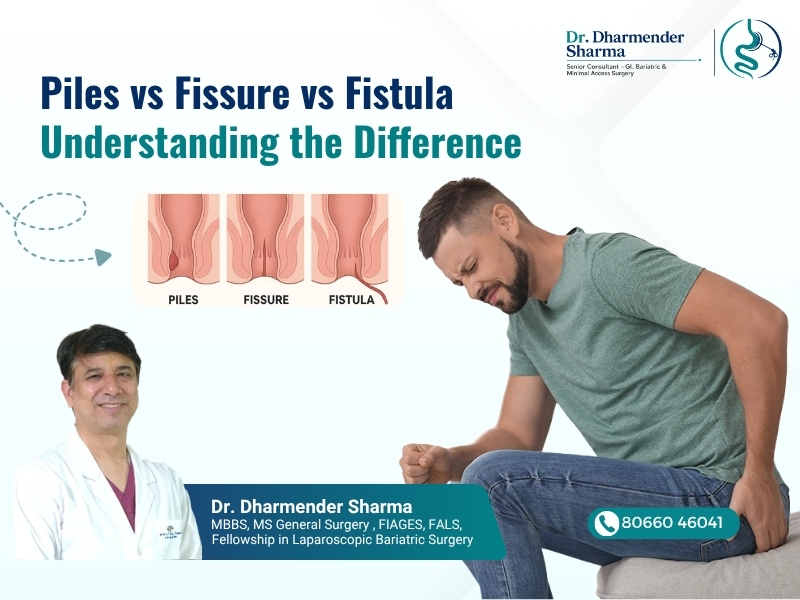
Many people suffer from pain, bleeding, or discomfort near the anal area but are unable to understand whether it is piles, fissure, or fistula. Since all three conditions affect the same body area, people often get confused between them. However, these problems are completely different and require different types of treatment.
Ignoring these symptoms for a long time can make the condition more painful and serious. That is why proper diagnosis and early treatment are very important.
If you are searching for advanced Piles Treatment in Gurugram, Dr. Dharmender Sharma provides expert care using modern laser and minimally invasive procedures. With more than 23 years of surgical experience, he offers safe and effective treatment for piles, fissure, fistula, and other colorectal conditions.
This blog explains the difference between piles, fissure, and fistula in very simple language so anyone can easily understand the symptoms, causes, and treatment options.
What Are Piles?
Piles, also known as hemorrhoids, are swollen blood vessels inside or outside the anal area. They usually develop because of pressure during bowel movements or long-term constipation.
People looking for Piles Treatment in Gurugram often complain about bleeding, itching, swelling, or discomfort while passing stool.
Piles can be of two types:
Internal Piles
These develop inside the rectum and usually cause painless bleeding.
External Piles
These develop outside the anus and may cause pain, swelling, and irritation.
Piles are very common among adults, especially people with constipation or unhealthy eating habits.
Common Symptoms of Piles
Bleeding During Stool Passing
Fresh red blood after bowel movements is one of the most common signs of piles.
Swelling Around the Anal Area
External piles may appear like soft lumps near the anus.
Pain While Sitting
Some patients experience discomfort while sitting for long hours.
Itching and Irritation
The affected area may feel itchy and uncomfortable throughout the day.
Mucus Discharge
Some patients may notice mucus leakage after bowel movements.
If these symptoms continue regularly, proper Piles Treatment in Gurugram should not be delayed.
What Is an Anal Fissure?
An anal fissure is a small cut or crack in the skin around the anus. It mostly happens because of hard stool, severe constipation, or excessive straining during bowel movements.
Patients searching for Fissure Treatment in Gurugram usually experience severe pain while passing stool.
Unlike piles, fissure pain is often sharp and burning in nature.
Common Symptoms of Fissure
Sharp Pain During Bowel Movements
This is the most common symptom of fissure.
Burning Sensation After Stool Passing
The pain may continue for several hours after bowel movements.
Small Amount of Bleeding
Patients may notice blood spots on toilet paper.
Tightness Around the Anal Area
The muscles around the anus may become tight and painful.
Fear of Passing Stool
Many people avoid bowel movements because of severe pain.
Early Fissure Treatment in Gurugram can help prevent chronic fissure problems.
What Is an Anal Fistula?
An anal fistula is an abnormal tunnel that forms between the anal canal and the outer skin near the anus. It usually develops because of infection or pus collection near the anal region.
Many patients searching for Piles Treatment in Gurugram later discover that their actual condition is fistula.
Unlike piles and fissure, fistula is usually associated with infection and discharge.
Common Symptoms of Fistula
Pus or Fluid Discharge
Continuous discharge from the anal area is a common sign.
Pain and Swelling
Patients may feel swelling and pain around the anus.
Repeated Infection
Fistula can cause recurrent abscess and infection.
Bad Smell and Skin Irritation
Discharge may irritate the surrounding skin.
Fever in Severe Cases
Some patients may develop fever due to infection.
Fistula generally requires surgical treatment for complete recovery.
Main Difference Between Piles, Fissure, and Fistula
Although piles, fissure, and fistula affect the same area, their causes and symptoms are very different.
| Condition | Main Cause | Common Symptom |
|---|---|---|
| Piles | Swollen blood vessels | Bleeding and swelling |
| Fissure | Tear in anal skin | Severe pain during stool |
| Fistula | Infection and pus tunnel | Discharge and swelling |
Understanding these differences helps patients choose the correct Piles Treatment in Gurugram or fissure and fistula care.
Causes of Piles
Several lifestyle habits can increase the risk of piles.
Constipation
Hard stool puts pressure on rectal veins.
Sitting for Long Hours
People with desk jobs are more likely to develop piles.
Obesity
Excess body weight increases pressure around the rectal area.
Low Fiber Diet
Lack of fruits and vegetables can worsen constipation.
Pregnancy
Pregnant women may develop piles because of increased pressure.
Causes of Fissure
Hard Stool
Passing hard stool can tear the anal skin.
Severe Constipation
Repeated straining increases fissure risk.
Chronic Diarrhea
Frequent bowel movements may also damage the anal lining.
Poor Hydration
Less water intake can harden stool.
Patients suffering from these problems often seek Fissure Treatment in Gurugram for relief.
Causes of Fistula
Anal Infection
Infection near the anus is one of the main causes.
Abscess Formation
Untreated abscess may develop into fistula.
Crohn’s Disease
Inflammatory bowel disease may increase fistula risk.
Weak Immunity
Poor immunity can slow infection healing.
How Are These Conditions Diagnosed?
Correct diagnosis is very important because piles, fissure, and fistula require different treatments.
Dr. Dharmender Sharma carefully examines the patient and may suggest:
- Physical examination
- Proctoscopy
- Colonoscopy
- MRI scan in fistula cases
Accurate diagnosis helps provide effective Piles Treatment in Gurugram and other anorectal treatments.
Non-Surgical Treatment Options
Early-stage anorectal conditions may improve with simple lifestyle changes and medicines.
High Fiber Diet
Fiber-rich food softens stool and improves bowel movement.
Drink Plenty of Water
Water helps prevent constipation.
Sitz Bath
Warm water baths reduce pain and swelling.
Medications
Creams and medicines may help reduce symptoms.
Regular Exercise
Physical activity improves digestion and bowel health.
Patients with mild symptoms may improve without surgery through proper Fissure Treatment in Gurugram and lifestyle management.
Advanced Laser Treatment for Piles
Modern laser procedures are becoming very popular because they are safer and less painful than traditional surgery.
Dr. Dharmender Sharma offers advanced Piles Surgery in Gurugram using modern laser technology.
Benefits of Laser Piles Surgery
Less Pain
Laser treatment causes minimal tissue damage.
Faster Recovery
Patients can recover much quicker.
Minimal Bleeding
Laser procedures reduce blood loss.
Short Hospital Stay
Most patients can go home the same day.
Smaller Wounds
Laser surgery leaves minimal scars.
Because of these benefits, many patients now choose laser Piles Surgery in Gurugram.
Treatment for Fissure
Fissure treatment depends on how severe the condition is.
Mild Fissure Treatment
Medicines, diet changes, and warm water baths may help.
Chronic Fissure Treatment
Long-term fissures may require minimally invasive surgery.
Patients looking for advanced Fissure Treatment in Gurugram often prefer modern minimally invasive procedures.
Treatment for Fistula
Fistula usually does not heal completely with medicines alone.
Dr. Dharmender Sharma provides advanced fistula surgery using safe and modern techniques for better recovery.
Why Early Treatment Is Important
Ignoring piles, fissure, or fistula can lead to serious complications.
Untreated Piles May Cause
- Severe bleeding
- Swelling
- Infection
Untreated Fissure May Cause
- Chronic pain
- Muscle spasm
- Difficulty passing stool
Untreated Fistula May Cause
- Repeated infection
- Pus collection
- Severe discomfort
Early Piles Treatment in Gurugram helps prevent complications and improves quality of life.
Why Choose Dr. Dharmender Sharma?
Patients trust Dr. Dharmender Sharma because of his experience, surgical expertise, and patient-friendly treatment approach.
Reasons to Choose Him
- 23+ years of surgical experience
- Expertise in laser and minimally invasive surgery
- Advanced treatment technology
- Personalized patient care
- Faster recovery-focused treatment
- Safe and hygienic environment
These qualities make him a trusted choice for Piles Treatment in Gurugram and anorectal disorders.
Frequently Asked Questions (FAQs)
1. What is the main difference between piles and fissure?
Piles are swollen veins, while fissure is a small tear in the anal skin.
2. Is fistula dangerous?
Fistula can cause repeated infection and usually requires surgery for proper treatment.
3. Can piles heal without surgery?
Mild piles may improve with medicines and lifestyle changes.
4. Is laser piles surgery painful?
Laser surgery is usually less painful and offers faster recovery.
5. What causes fissure?
Hard stool, constipation, and straining during bowel movements are common causes.
6. Does fistula always require surgery?
Most fistula cases need surgery because they do not heal completely with medicines alone.
7. How long does recovery take after piles surgery?
Most patients recover within a few days to weeks depending on the procedure.
8. Who provides the best Piles Treatment in Gurugram?
Dr. Dharmender Sharma is known for advanced laser and minimally invasive anorectal treatment.